
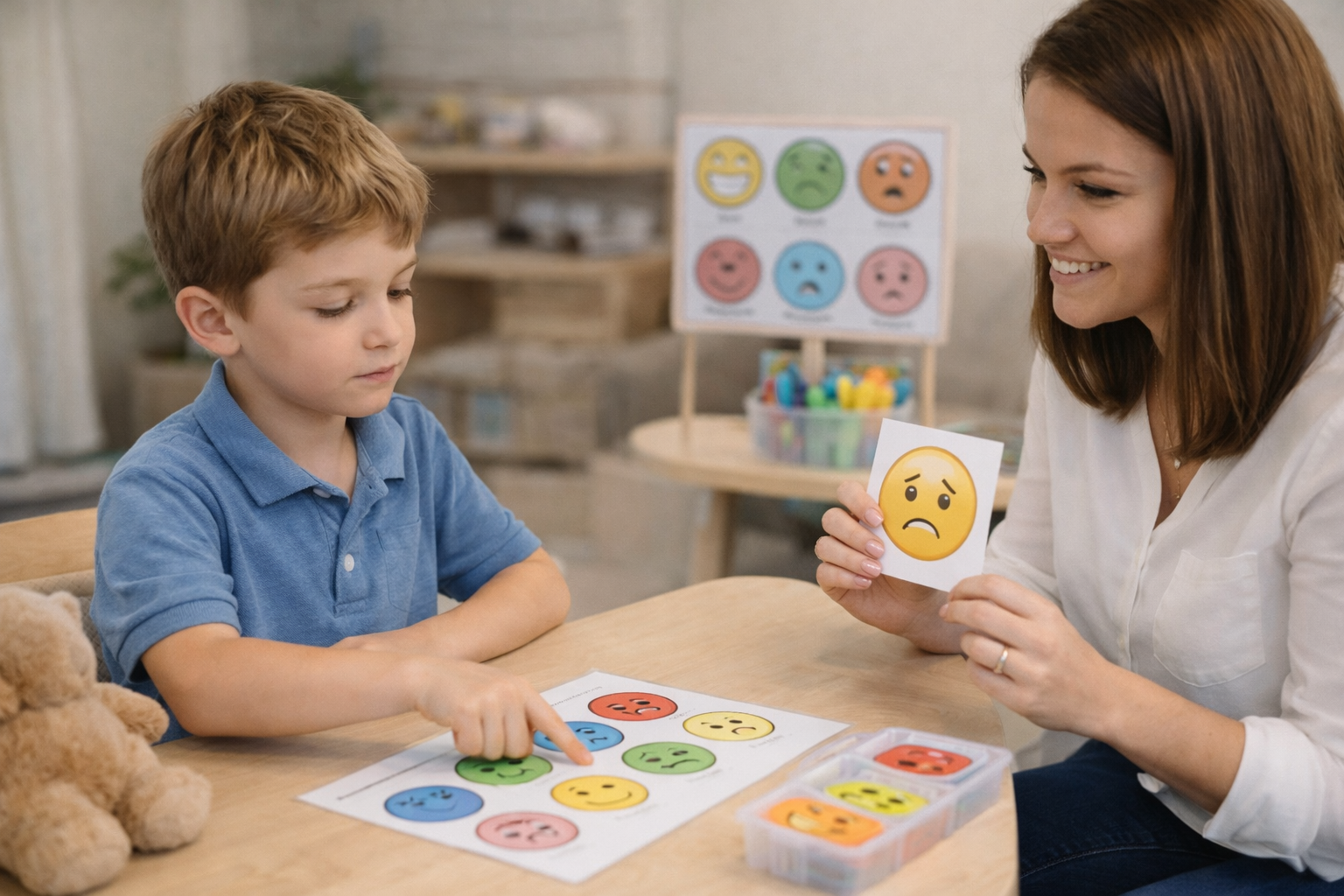
Helping kids express their emotions isn’t just about stopping a tantrum or calming them down. It’s about teaching them what those emotions are and how to handle them. That kind of learning takes time, support, and the right tools.
ABA therapy in St. Augustine, FL, offers families a hands-on approach that works in real life, not just in a clinic. At Timestamps Support Services, the focus is on helping children build real emotional understanding they can use every day. It’s not about fixing kids, but about giving them the skills to handle the world around them.
Here are some effective ways ABA therapy helps kids understand and express their emotions.
Key Takeaways
- Emotional outbursts are often a sign that kids don’t yet have the tools to name or manage what they feel.
- Kids are more likely to stay calm when they’ve already practiced what to do before big feelings take over.
- Teaching emotional regulation works best when kids see how their choices affect what happens next.
Teaching Feelings Before Fixing Behavior
When a child has a big reaction, it’s easy to focus on what they did. ABA therapy looks deeper and helps kids understand what they felt first. A child learns that having a feeling is okay, even if their actions need to change.
Therapists take a moment to name the emotion before talking about what happened. This helps kids see that feelings aren’t wrong, but there are better ways to show them. Over time, children begin to tell you how they feel instead of acting out.
Turning Triggers Into Teaching Moments
Growth often shows up in the middle of frustration. When a child becomes upset or overwhelmed, ABA therapists see that moment as an opening for guidance. Real situations become powerful learning opportunities.
Support happens right then and there instead of after the fact. The therapist calmly coaches a better response while the child is still experiencing the trigger. With steady practice, those same situations become easier to manage the next time around.
Strengthening Emotional Skills Through Practice
Big feelings are easier to manage when kids already know what to do with them. ABA therapy builds those skills during quiet moments when the child feels safe and focused. This calm setting gives them a chance to really learn and remember each step.
Each time a coping tool is practiced, it gets a little more natural. Kids start reaching for those tools on their own without needing reminders. Over time, these small wins add up to stronger self-control and more confidence.
Real Change Starts with ABA Therapy in St. Augustine, FL
Teaching kids how to manage emotions isn’t about stopping big feelings, it’s about helping them respond in a way that works. Timestamps Support Services gives families simple, consistent tools that turn emotional struggles into steps forward. With the right support, your child can build lasting emotional strength.
Frequently Asked Questions
What are some ABA strategies that help with emotional meltdowns?
ABA strategies focus on teaching kids what to do before a meltdown happens, like using a break card or practicing deep breaths. These tools become more effective when they’re part of everyday routines and practiced during calm moments.
How does ABA help my child connect emotions with behavior?
ABA breaks down emotional reactions into simple parts so kids can understand how feelings lead to certain actions. This helps them see patterns, make better choices, and feel more in control of what happens next.
Can ABA help if my child doesn’t know how to talk about emotions?
Yes, ABA uses visual supports, role play, and clear language to help kids name and express emotions in a way that makes sense to them. Over time, they learn to communicate what they feel instead of reacting with behavior alone.